Decide with clarity.
Learn from experience.
Unrecorded, they slip away quickly: why you're doing something, what the context was, what you're thinking. Decision Log helps you capture them, so you can see what really works and how things change over time.


Not a journal. Not a habit tracker.
Something that was missing in between.
In a journal, important decisions drown in daily entries. In a habit tracker, you tick off days, but you never write down why you started, or why you stopped. DecisionLog captures what gets lost in both: context, motivation, and the history of changes behind every decision. A habit, an experiment, a tool switch, a resolution: all in one place, with an awareness that grows over time.
A decision without context is just a faded memory
You change your diet, buy a flat, leave a project. In that moment you have reasons, data, thoughts. A few months later, you remember what happened, but not why. And without the "why," you don't know if the decision worked or what the experience taught you. DecisionLog turns that vague "I think back then…" into a concrete record: what the decision was, the context around it, the options you had, and what happened next. Not for the sake of archiving, but so that months later you can see your patterns, learn from experience, and face the next decision with your own history at hand, not faded guesswork.
What you get for free
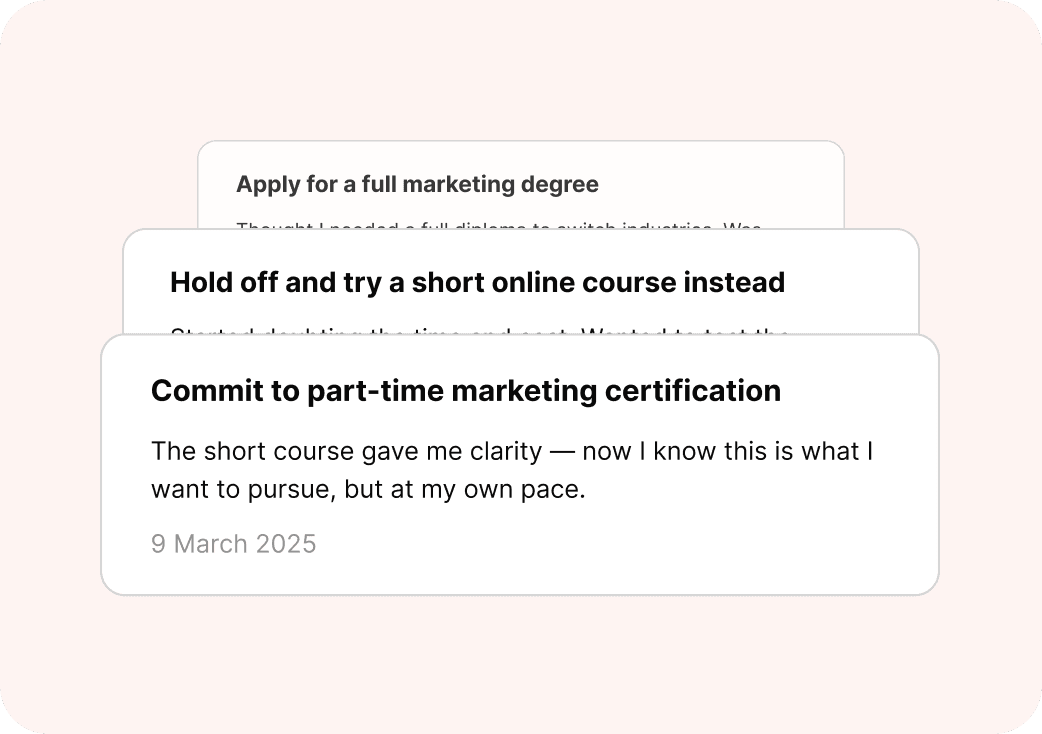
History of changes
Decisions change, and that's fine. Mark replacements and relationships between entries to see how one decision grew from another.


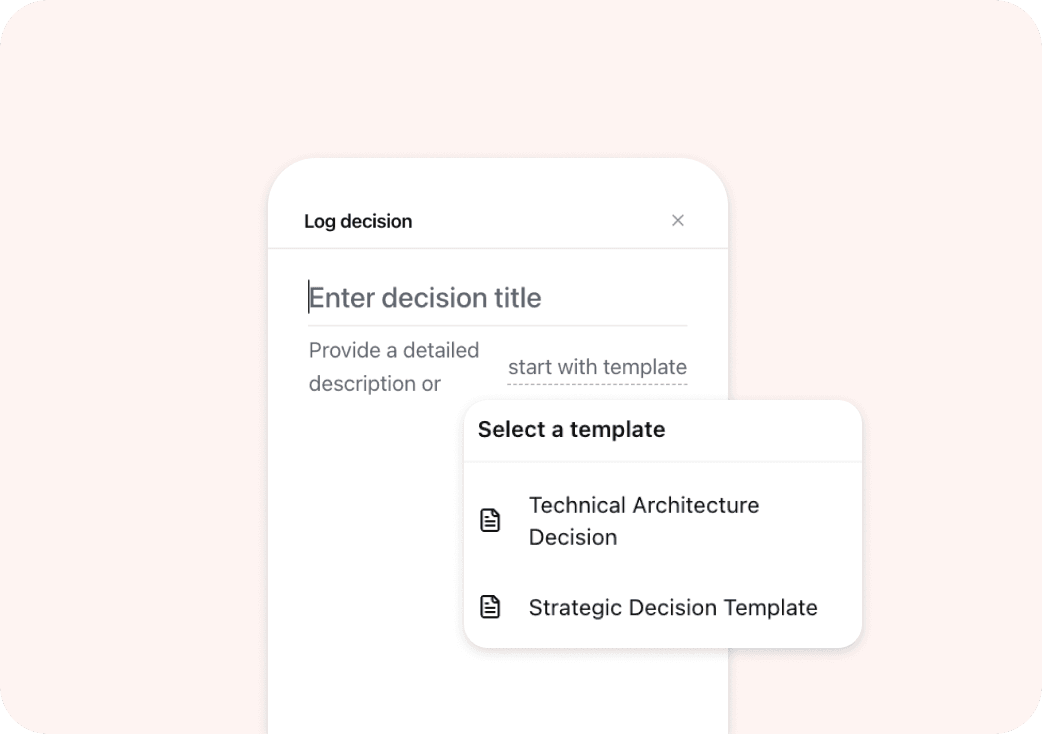
Decision templates
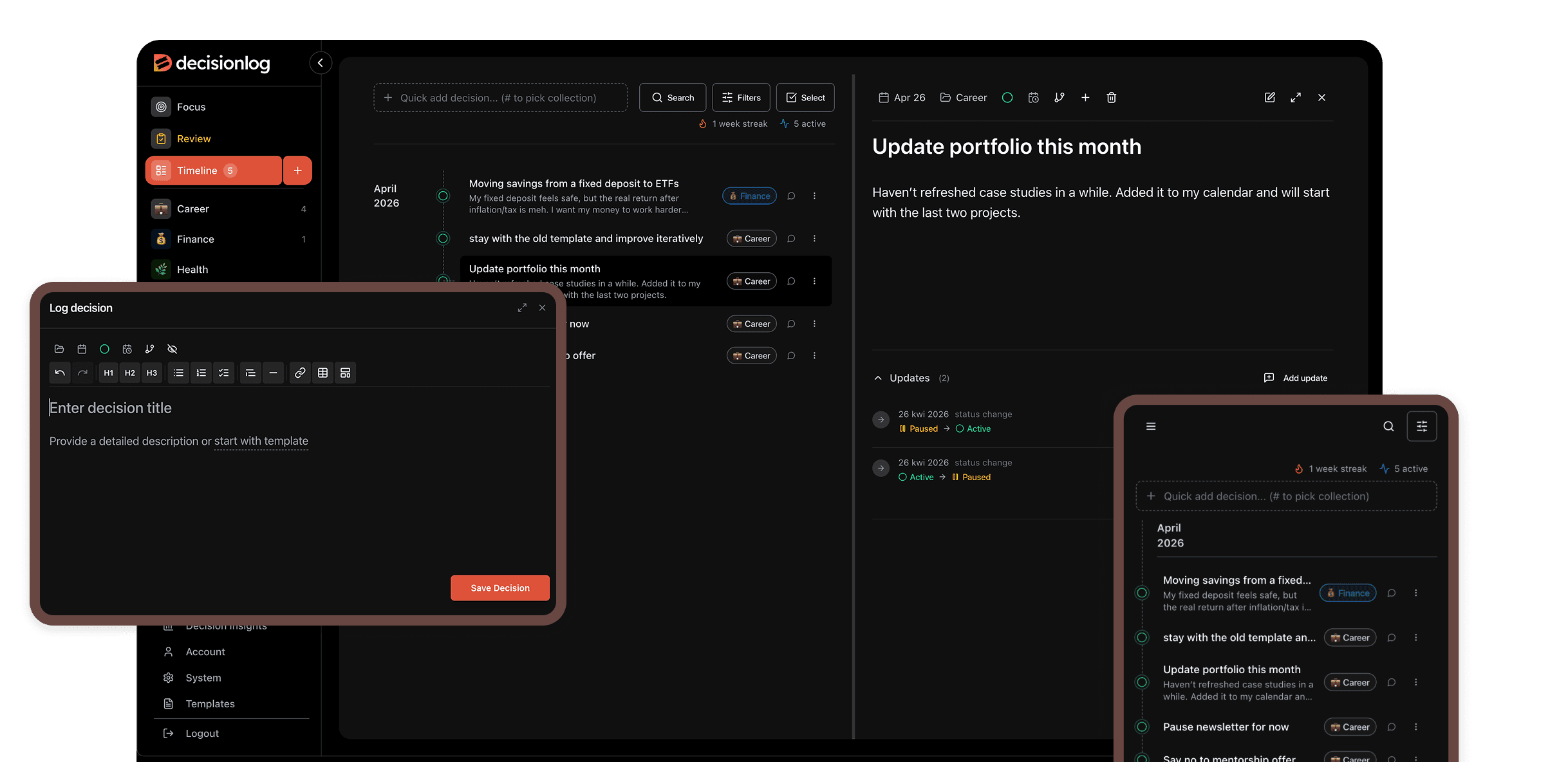
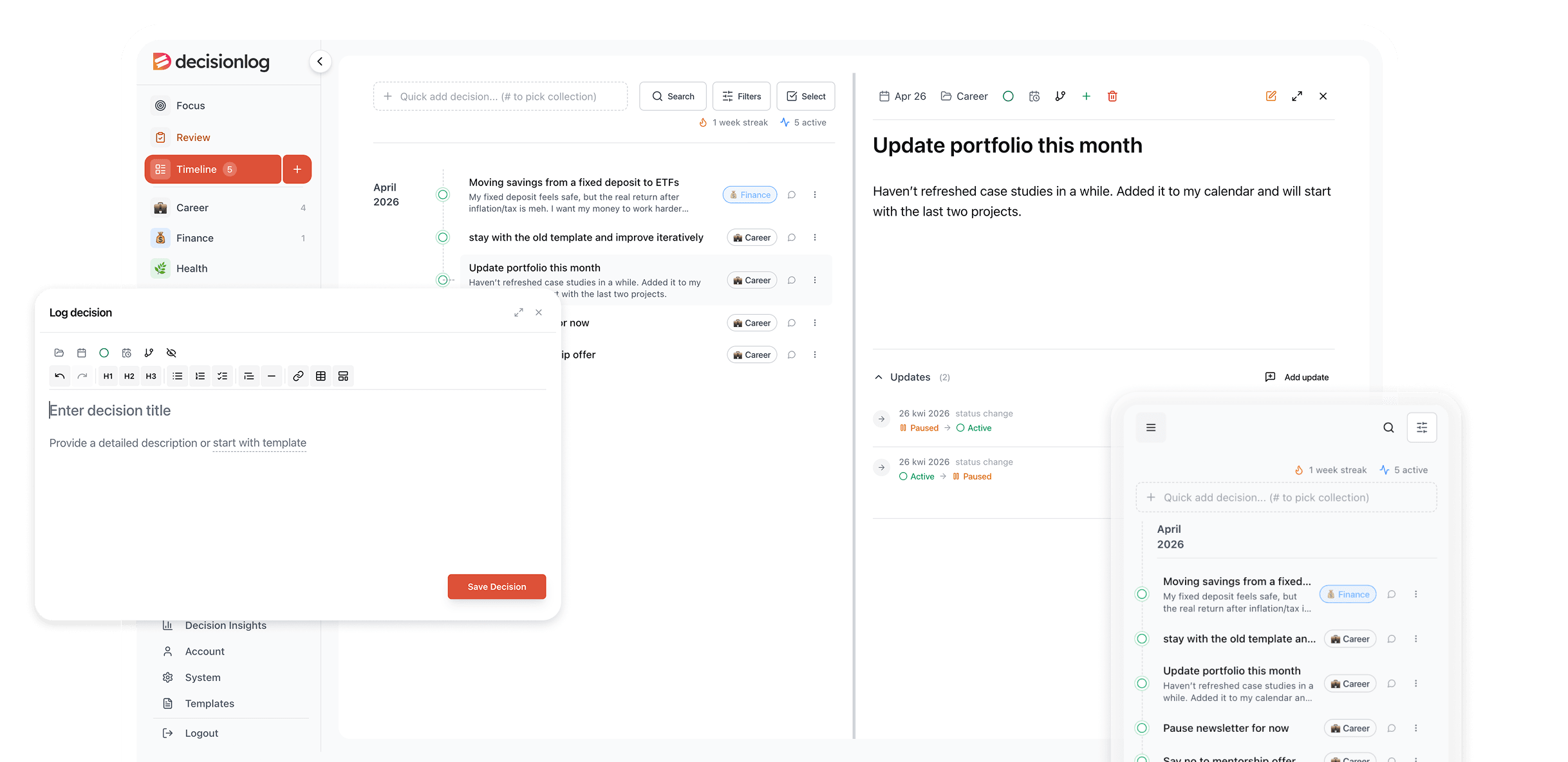
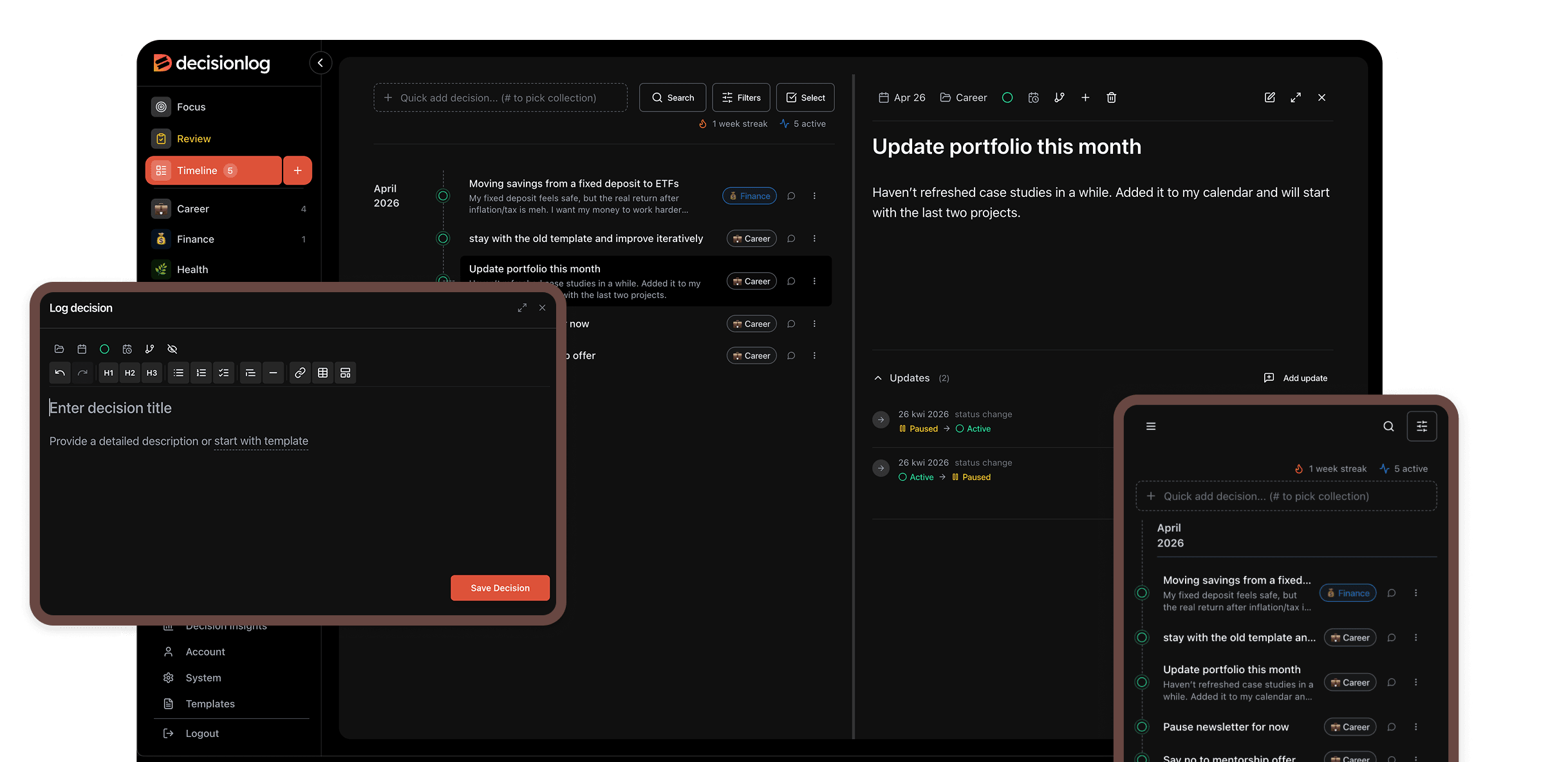
Ready-made structures that guide you through the decision-making process. No more blank page. Use ours or create your own.

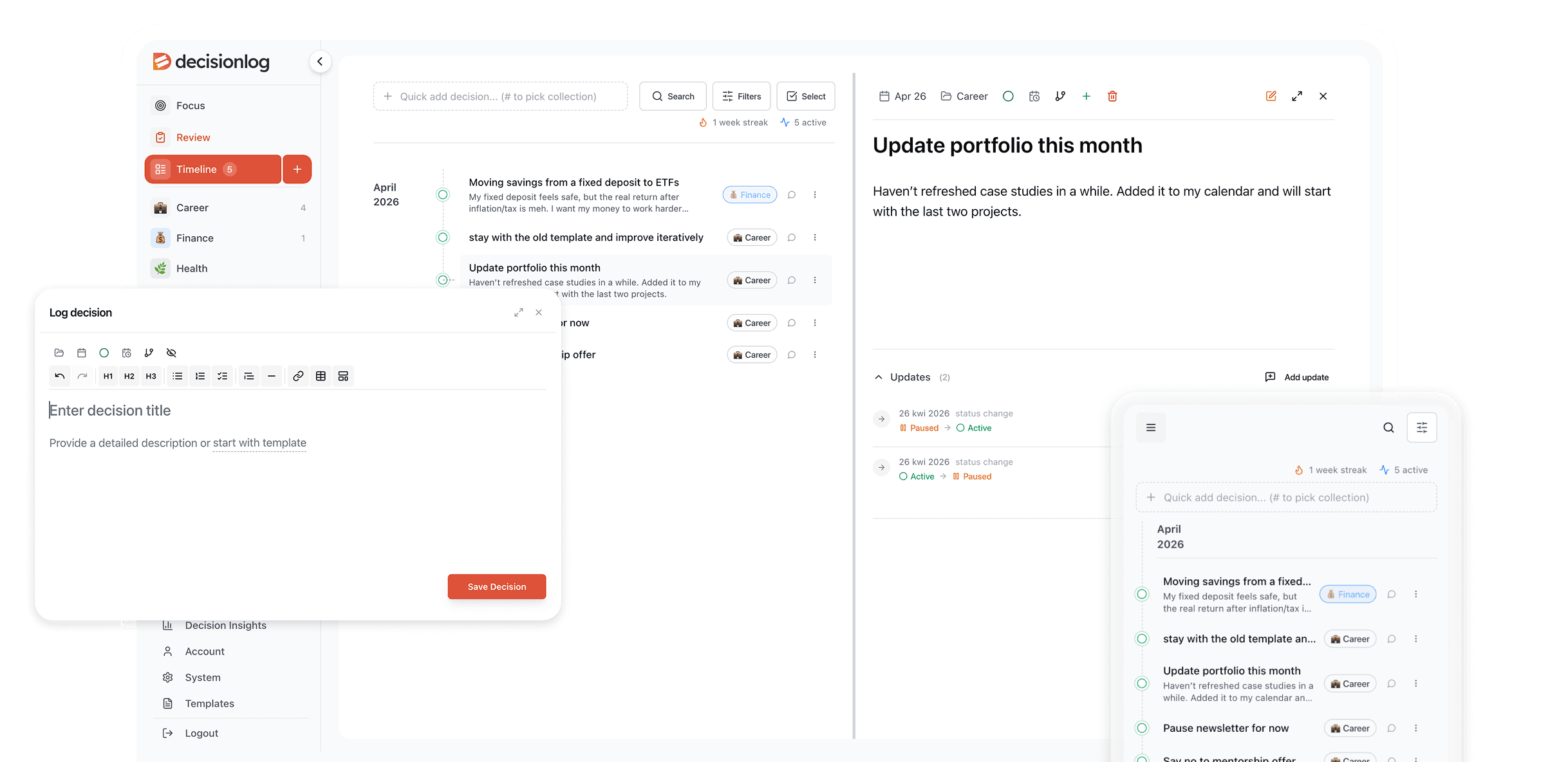
Collections, search, and filters
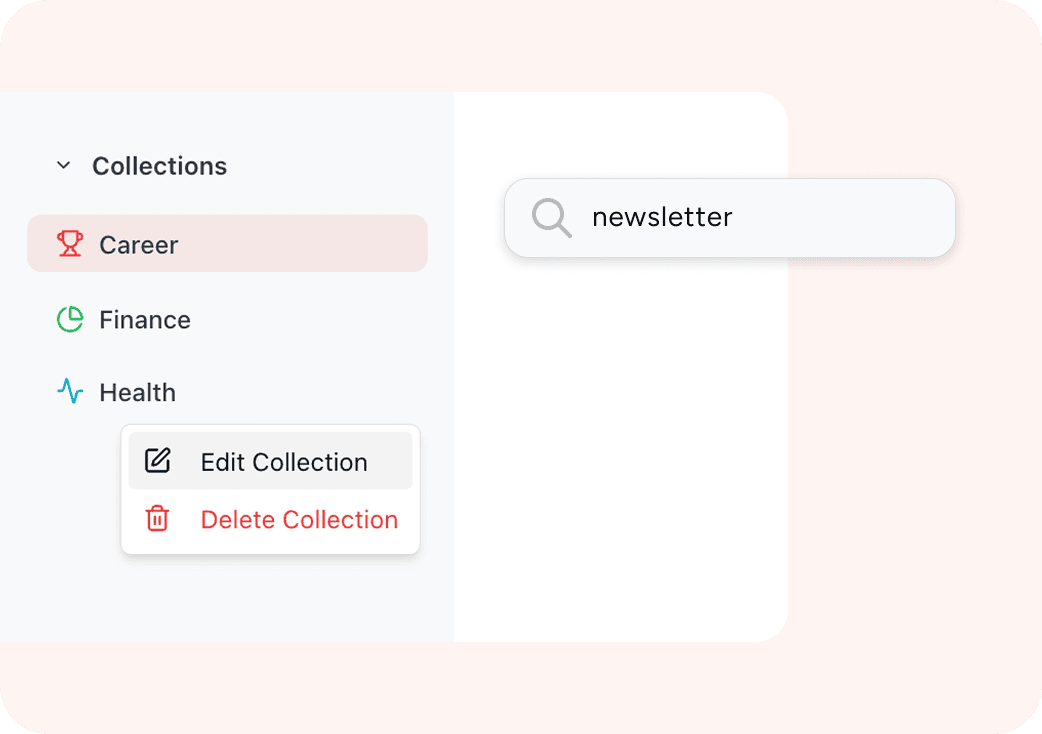
Group decisions by topic, filter by status, find anything in a second. Home renovation, career, health, finances: every topic in its own place.

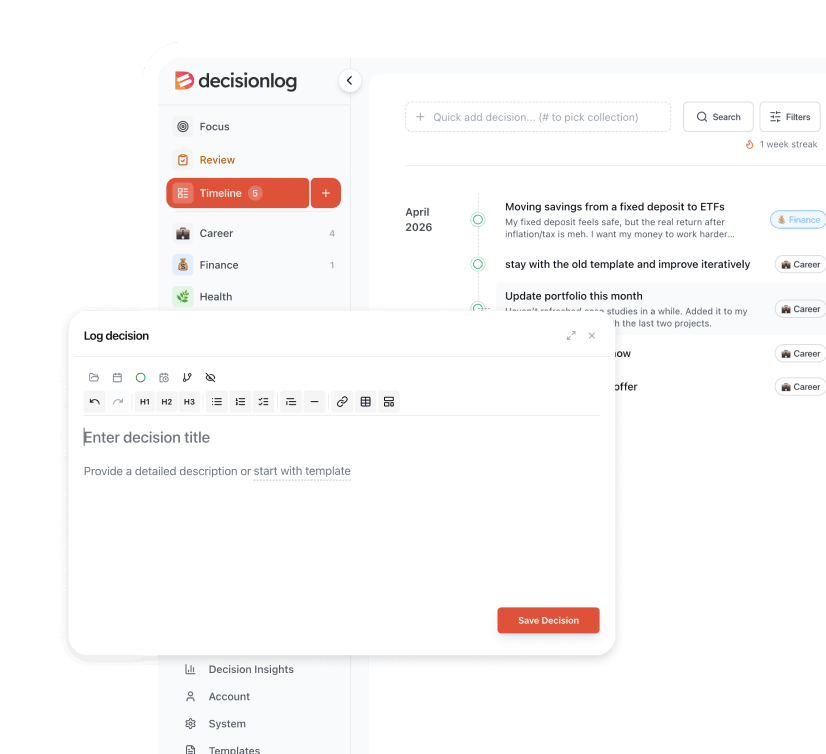
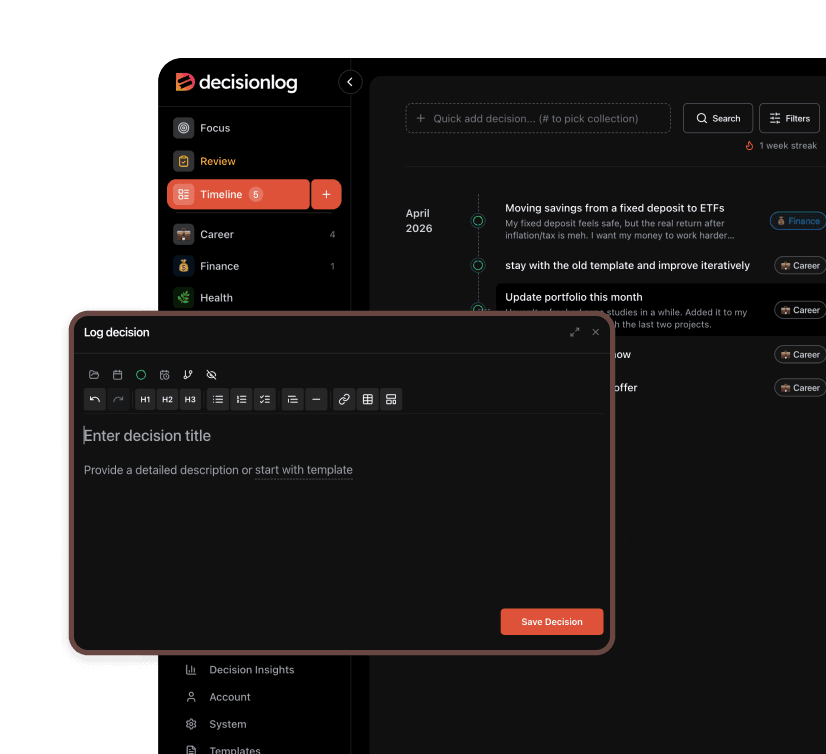
Clean Markdown editor
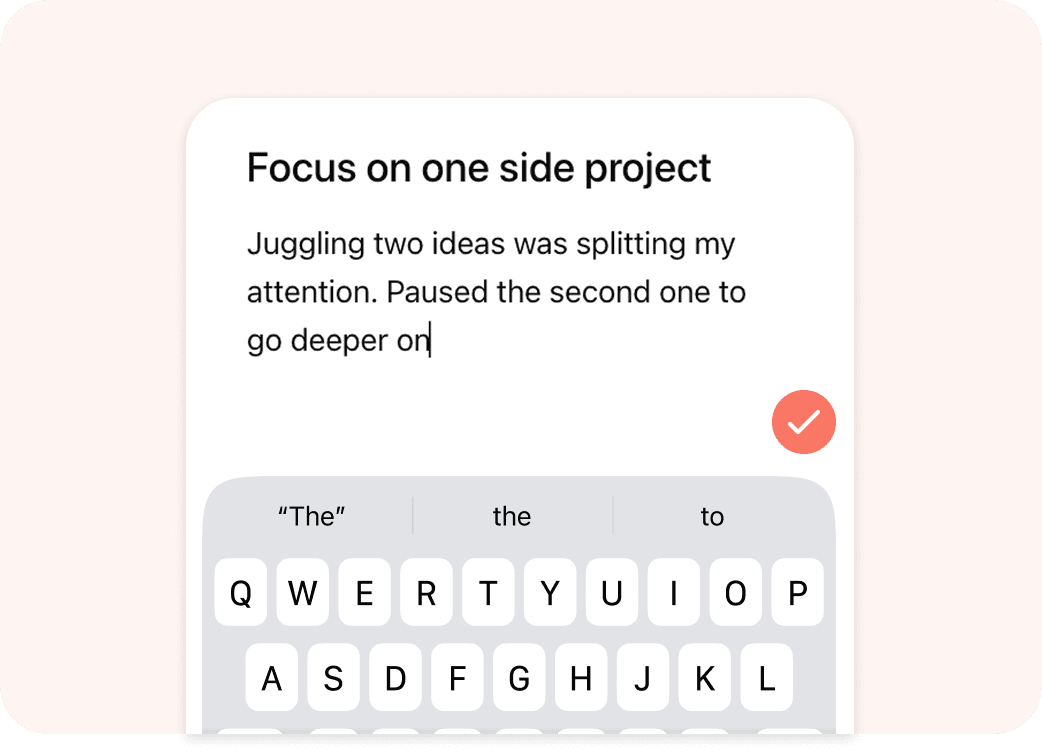
With formatting that just works, giving you the full picture of every decision: reasoning, options considered, and circumstances in one entry.

Favourite sections when you press "/".
Got fragments you keep reusing? Save them as sections and insert them with a single slash command. No copying, no searching.
Your data on your terms
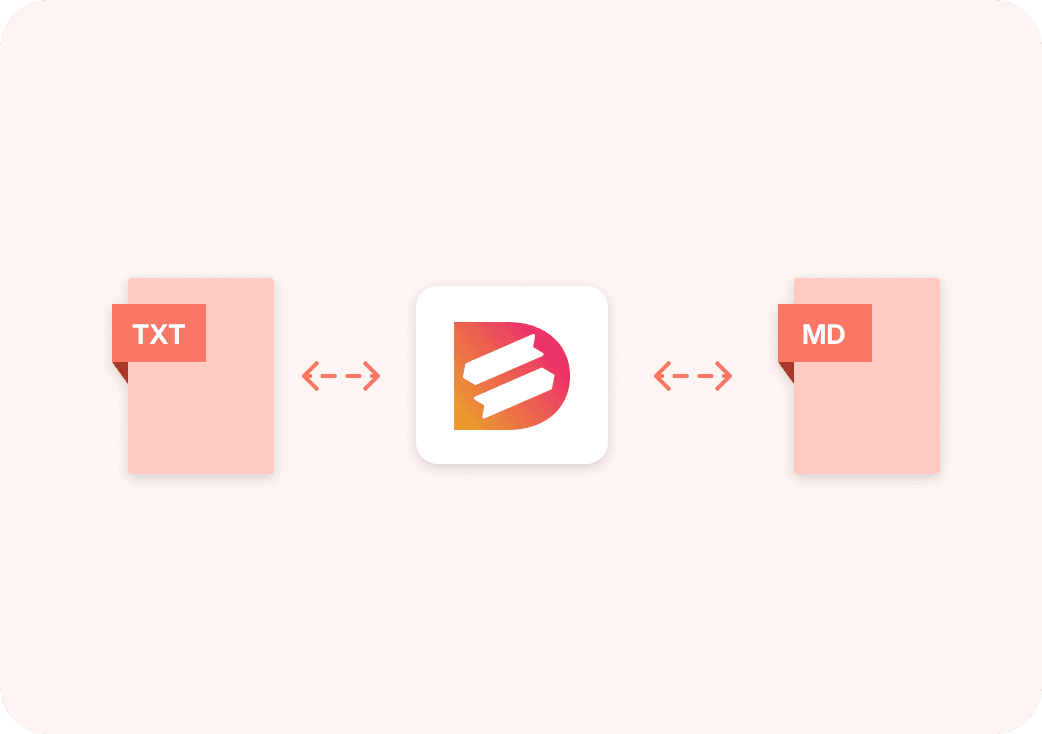
Import old notes, export to Markdown or JSON. Full portability, plenty of customization, your data moves both ways, because it's yours. We don't sell your entries or feed them to AI, because there is no AI here.


How it looks in practice
Concrete situations where DecisionLog changes the way you think about your choices.
See the shifts and direction of your goals, not just the current plan
"Switching my training: from running to crossfit."
Five months ago the decision was simple: start running to lose 4 kg. It worked. Now the goal has changed: time to focus on strength and endurance. The new decision replaces the old one. Linked entries show the path of transformation: where the decision to run came from, where the change came from, and what's next.
Stop repeating the same dilemma with every change
"Moving my notes from Notion to Obsidian."
A year later, another tool tempts you. You open the old entry and immediately see what your requirements were back then, who recommended it and why you picked it, and how that compares to what you need now. You don't start the analysis from scratch every time.
See the reasons behind decisions and whether they still make sense
"Moving savings from a fixed deposit to ETFs."
Six months ago, your fixed deposit was paying 7% and that was enough. Now rates have dropped, so it's time for a strategy change. You open the old entry. You see what convinced you then, what the concerns and the plan were. So the new decision stands on solid ground, not a shot in the dark.
Plan based on your own experience
"Flying to Mallorca, without a travel agency?"
You come back from a trip knowing exactly: what was great, what you'd do differently next time, what budget worked, or that going on your own saved you a lot and let you see more. But six months later, planning the next trip, all that's left is a vague "it was nice." When you record what worked, what didn't, and why, the next trip can be better planned and more on point.
"A quiet weekend getaway, once a quarter."
Regular weekend trips instead of one long holiday a year? By recording this, you see what actually recharges your batteries and what you need.
Stop starting your research from scratch every time
"Switching phones from iPhone to Samsung."
Every time, the same carousel: comparing specs, reading reviews, asking friends. Two years later, back to square one. When you have a record of what mattered last time, what worked and why, your next choice starts from your own experience, not someone else's reviews.
"Looking for a new cream, third time this year."
You try, test, switch. After a few months you can't remember what was wrong with the last one or why you're still looking. When every try is recorded with a reason and an assessment, you see the pattern instead of going in circles.
"Going for a two-year-old used car instead of a new one from the dealer."
Big expense, lots of variables. You record what mattered: budget, mileage, service costs, what to watch out for. A few years later, when it's time to switch again, you have your own purchase history with context, not just a vague sense that "it was probably fine."
Connect dozens of choices spread across time
"Planning a house build over 18 months."
Every choice seems obvious at the time. Six months later, you can't remember why you chose that particular option. When each one is recorded with context, the answer is always at hand.
Have data instead of guesswork and gut feelings
"Should we drop the free plan?"
You record the context: conversion data, user feedback, options considered. Three months later, you add the results. Next time you face a similar dilemma, you reach for facts, not hunches.
Knowledge doesn't disappear with the people who made the calls
"REST or GraphQL for the new service?"
A new person on the team asks "Why GraphQL?" The answer is already written down, along with the alternatives and why they were dropped. No need to track down people who left months ago.
Learn from patterns instead of guessing
"Fixed price or hourly rate for clients?"
After a dozen projects, you start seeing when each approach works. You stop guessing, because your own experience, recorded and accessible, shows you the pattern.
Is DecisionLog for you?
Honest answer: it's not for everyone.
It's for you if:
- You set goals and want to act in line with what motivates you, not just tick off tasks
- You have a feeling you keep repeating the same mistakes, and you want to finally catch them
- You keep a journal, but the most important decisions and insights get buried in daily entries
- You want structure that breaks through decision paralysis and overthinking
- You tend to overanalyse and overthink, and you need a place to organise it all
- Your priority lists keep changing, but the history disappears with them. You don't know what and why fell off, what came back, and how many times you've tried the same thing
- You make decisions that shape your life or career, and you want to document them deliberately
- You feel like you're constantly changing things, but you can't see the bigger picture
It's not for you if:
- You're looking for a project or task management tool
- You're looking for a habit tracker for daily check-offs. DecisionLog isn't about streaks, it's about the decisions behind habits and their evaluation
- You'd rather not write down your thoughts. DecisionLog only works when you put something into it
- You're looking for ready-made answers. The tool helps organise your thinking, but you draw the conclusions yourself
- You're looking for a shared team workspace. For now, DecisionLog is individual
- You never look back, and you don't plan to start
FAQ
Start documenting your decisions
Before you forget why.